
Condition

Understanding Big Toe Osteoarthritis

Osteoarthritis of the big toe, also known as first metatarsophalangeal (1st MTP) joint osteoarthritis or hallux rigidus, is a common cause of pain and stiffness in the forefoot. It can make walking, standing, and wearing shoes uncomfortable and may significantly affect daily activities and mobility. Symptoms often develop gradually and may worsen over time, particularly with walking or pushing off through the toes. Many patients seek assessment when pain persists despite footwear changes or simple measures, or when symptoms are limiting work, exercise, or independence. While big toe osteoarthritis cannot be cured, appropriate management can reduce pain and improve function.
MTPJ 1 copy

What is 1st MTP joint osteoarthritis?

The 1st MTP joint is the joint at the base of the big toe, playing a key role in walking and balance. Osteoarthritis at this joint involves cartilage loss, bony changes, and local inflammation, leading to pain, stiffness, and reduced movement. Over time, the joint may become increasingly stiff, a pattern often referred to as hallux rigidus. The condition is distinct from tendon or nerve problems and is a frequent cause of forefoot pain in adults.


Symptoms and functional impact?

Typical symptoms include pain and stiffness at the base of the big toe, particularly during walking or when pushing off. Patients may notice swelling, reduced toe movement, or a grinding sensation. Symptoms are often worse with activity and may limit walking distance, standing tolerance, and footwear choice. As stiffness progresses, altered gait patterns can develop, sometimes leading to pain elsewhere in the foot or lower limb.

Assessment and diagnosis

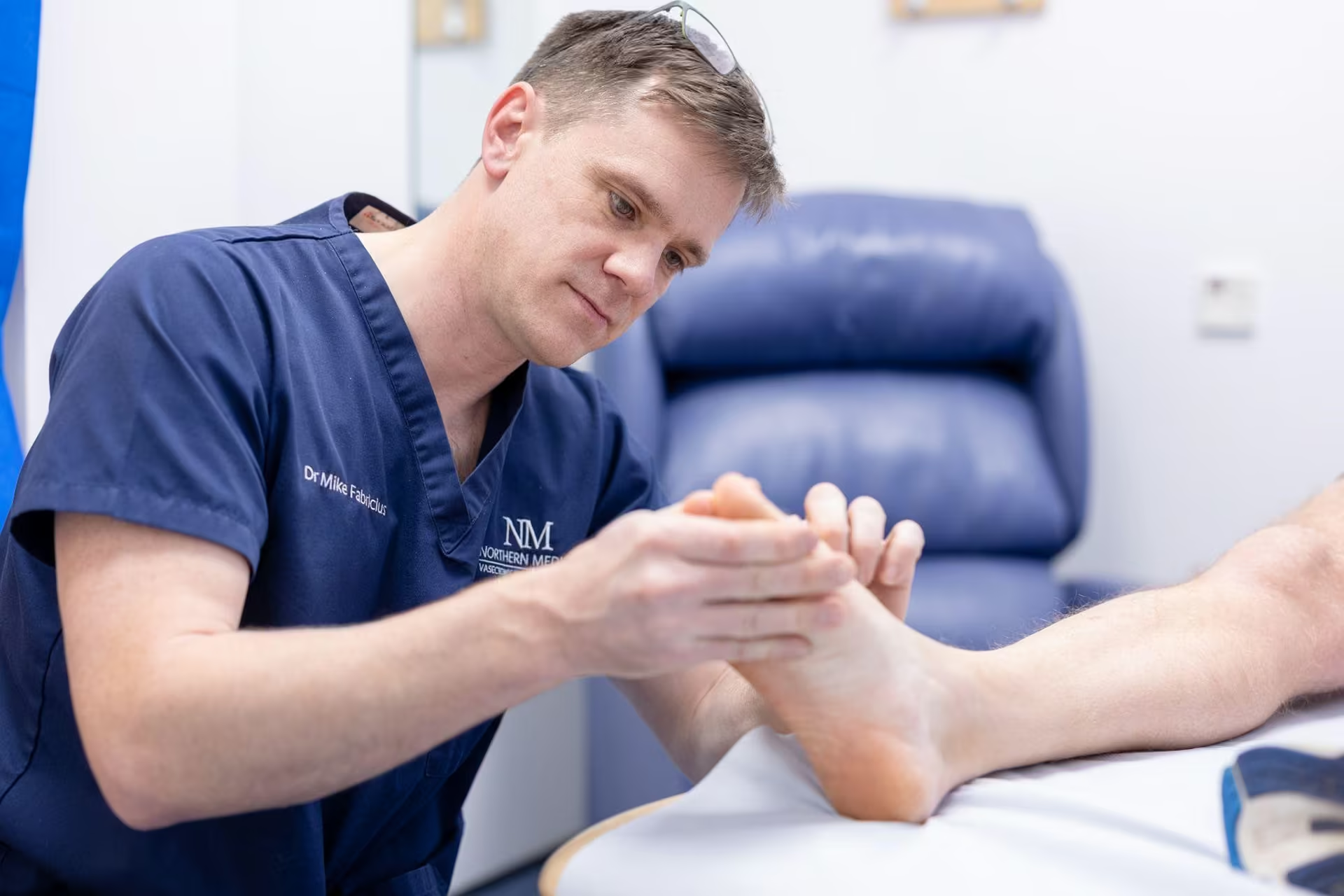
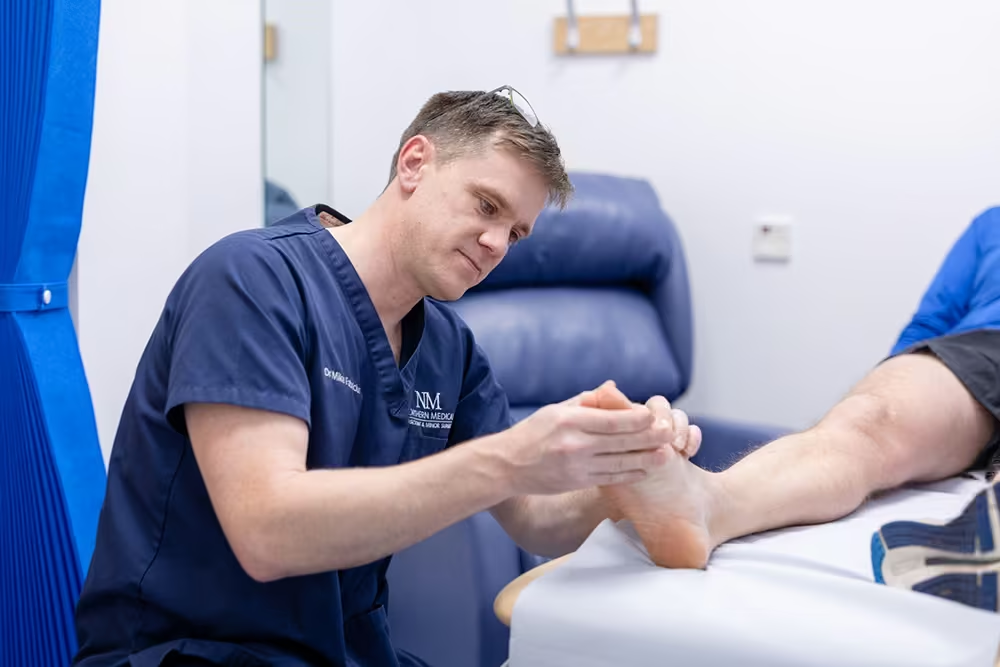
Diagnosis is primarily clinical, based on history and examination of the big toe joint. Plain X-rays are commonly used to confirm osteoarthritic changes and assess severity, but imaging findings are interpreted alongside symptoms, as radiographic severity does not always correlate with pain. Accurate diagnosis is important to distinguish 1st MTP joint osteoarthritis from conditions such as gout, sesamoiditis, or soft tissue injuries.

Treatment options

Initial management may include advice on footwear modification, activity adjustment, and simple analgesia. Many patients presenting to our clinic have already tried these measures without adequate relief.


Image-guided corticosteroid injection into the 1st MTP joint can provide pain relief for selected patients, although benefits are usually time-limited.


Focused shockwave therapy (FSWT) has emerging evidence in osteoarthritis affecting small joints and may be considered as an adjunctive option in selected cases, particularly where patients wish to avoid injection or surgery.


Surgical options, including joint-preserving or joint-replacing procedures, are reserved for patients with persistent pain and functional limitation despite appropriate non-operative care.

Frequently Asked Questions

FAQ – Big Toe (1st MTP Joint) Osteoarthritis

What is hallux rigidus?
Hallux rigidus is another term for osteoarthritis of the 1st MTP joint and refers to the progressive stiffness that can develop at the base of the big toe.
No. Gout is an inflammatory condition caused by uric acid crystal deposition, whereas osteoarthritis involves cartilage degeneration. The two conditions can cause similar pain but are managed differently.
Not always. Diagnosis is mainly clinical. X-rays may be useful to confirm the diagnosis or assess severity but are not required in every case.
Yes. We are happy to review previous NHS or private imaging and reports.
Yes. If imaging is clinically appropriate, we can arrange X-rays as part of your assessment.
Steroid injections can provide pain relief for some patients, particularly in earlier disease. The duration of benefit varies.
Relief may last from weeks to several months. Injections do not reverse osteoarthritis.
Evidence is limited but evolving. Shockwave therapy may help some patients, although results are variable and it is not suitable for everyone.
Many patients manage with non-operative treatment. Surgery is considered when pain and functional limitation remain significant.
No. Physiotherapy has a limited role in 1st MTP joint osteoarthritis. We will advise if any additional measures are likely to be helpful.

Why choose Northern Medical Practitioners?

Patients with 1st MTP joint osteoarthritis are assessed at Northern Medical Practitioners by experienced clinicians with a focus on accurate diagnosis and appropriate escalation of care. Many patients attend after footwear changes or other conservative measures have failed to provide sufficient relief. We offer image-guided injection treatment where appropriate and discuss adjunctive options such as shockwave therapy in a measured, evidence-based way. Where non-operative treatments are unlikely to provide lasting benefit, we advise timely referral for specialist foot and ankle opinion.