Shockwave Therapy for Musculoskeletal Conditions

Shockwave therapy is a non-surgical treatment used for persistent musculoskeletal (MSK) pain, particularly chronic tendon and soft-tissue conditions that have not improved with simple measures such as rest, physiotherapy, or analgesia. It works by delivering focused sound waves to the affected tissue, stimulating biological healing processes and reducing pain over time.

At Northern Medical, shockwave therapy is provided as part of a structured MSK assessment and treatment pathway. We use focused shockwave technology, which allows accurate targeting of deeper tissues where appropriate. Treatment is delivered in clinic, requires no injections or anaesthetic, and most patients can continue normal daily activities.

Shockwave therapy is supported by a growing evidence base and is recommended in national and international guidelines for selected chronic MSK conditions.

Shockwave intro copy

What is Shockwave Therapy?

Shockwave therapy uses high-energy acoustic waves applied externally to the skin over the affected area. These waves stimulate increased blood flow, cellular activity, and collagen production within the tissue, helping to restart stalled healing processes.


It has been used for many years in orthopaedics and sports medicine, particularly for chronic tendinopathies. Unlike treatments that only provide short-term pain relief, shockwave therapy aims to address the underlying tissue pathology. It is most effective for long-standing conditions, and outcomes depend on accurate diagnosis and appropriate patient selection.
Conditions Commonly Treated

Shockwave therapy is most commonly used for chronic tendon and soft-tissue conditions lasting longer than three months. These include plantar fasciitis, Achilles tendinopathy, patellar tendinopathy, lateral hip pain (GTPS), tennis elbow, and calcific shoulder tendinopathy.


It may also be appropriate for selected muscle and ligament problems where recovery has plateaued. Not all musculoskeletal conditions respond to shockwave therapy, and it is not offered routinely without assessment. Your clinician will confirm whether shockwave is suitable for your diagnosis, symptom duration, and previous treatments.

What Does Treatment Involve?

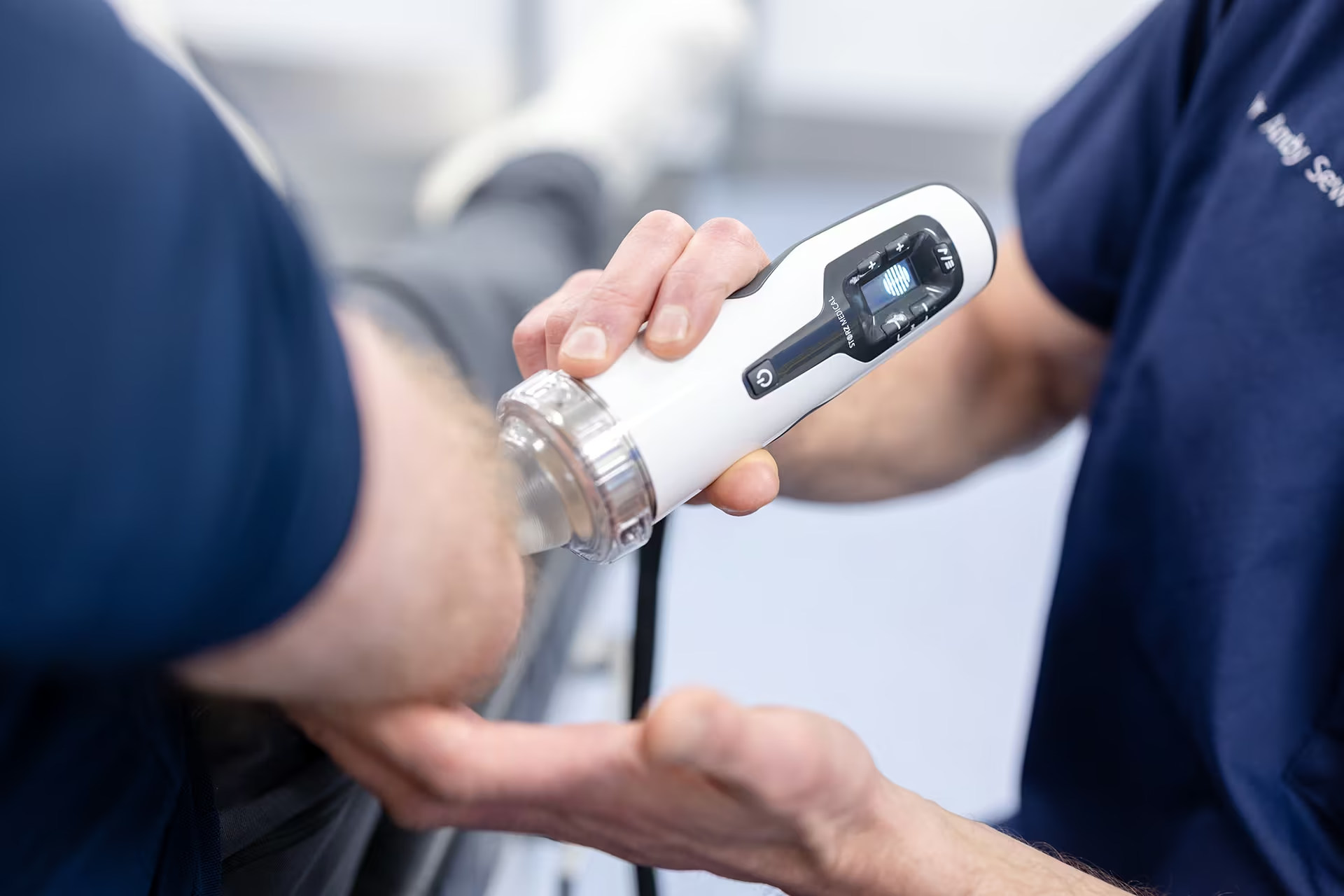
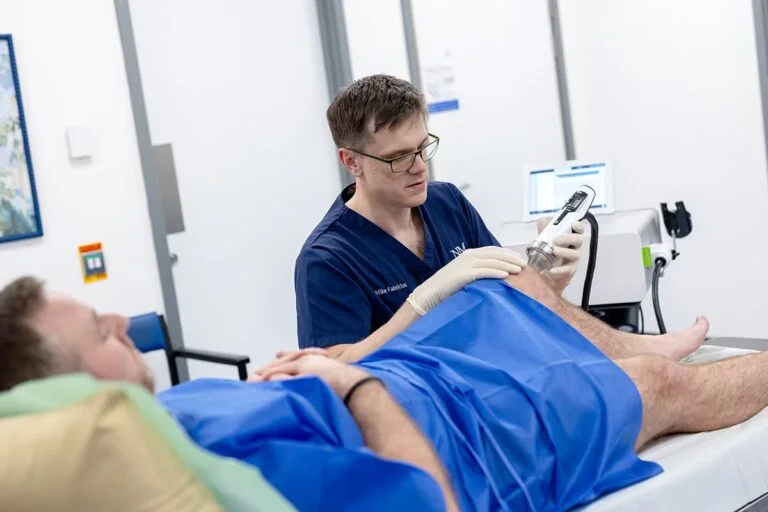
Treatment is delivered in clinic and typically takes 10–15 minutes per session. A handheld applicator is applied to the skin using ultrasound gel to transmit the shockwaves to the target tissue. Some people describe mild discomfort during treatment, but the intensity can be adjusted to ensure that it is tolerated well.

Most treatment plans involve a short course of sessions, commonly spaced one week apart. No injections, anaesthetic, or recovery time are required. Shockwave therapy is usually combined with a structured rehabilitation or loading programme to optimise results.

Effectiveness and Safety

Clinical studies show that shockwave therapy can reduce pain and improve function in selected chronic musculoskeletal conditions, particularly plantar fasciitis and tendinopathies. It is recommended in several national and international MSK guidelines when standard conservative treatments have failed.

Shockwave therapy is considered safe when appropriately prescribed and delivered. Side effects are usually mild and temporary, such as local soreness, redness, or bruising. Serious complications are rare. The treatment is not suitable for everyone, and contraindications are assessed carefully before treatment begins.
Price List

Pricing

Consultation
Initial Remote Consultation

Free

Consultation
Face to Face Assessment

100

Focused Shockwave Therapy
Course of 4 Treatments

540

Focused Shockwave Therapy
Course of 6 Treatments

720

What is shockwave therapy used for?
Shockwave therapy is used to treat persistent musculoskeletal pain, particularly chronic tendon and soft-tissue conditions that have not improved with standard conservative treatment. It is most commonly used for plantar fasciitis, Achilles tendinopathy, patellar tendinopathy, gluteal tendinopathy, lateral elbow pain, and calcific shoulder tendinopathy. It is not usually recommended for acute injuries.
Focused shockwave therapy delivers acoustic energy to a specific depth within the tissue, allowing precise targeting of deeper or well-localised pathology. Radial shockwave disperses energy more superficially and over a wider area. Focused shockwave is typically used in specialist MSK and orthopaedic settings and has stronger evidence for certain chronic tendon conditions.
We use focused shockwave because it allows controlled, targeted energy delivery based on the depth and location of the affected tissue. This is particularly important for conditions such as Achilles tendinopathy and plantar fasciitis. Focused shockwave aligns more closely with the clinical evidence for these conditions and supports consistent, reproducible treatment.
Shockwave therapy has been shown to reduce pain and improve function in selected chronic musculoskeletal conditions, particularly long-standing tendinopathies and plantar fasciitis. It is most effective when symptoms have been present for several months and have not responded to other conservative treatments. Results vary, and improvement is usually gradual rather than immediate.

Most patients require a short course of shockwave therapy, typically four to six sessions, usually spaced one week apart. The exact number depends on the condition being treated and your response to treatment. Progress is reviewed during the course to guide further management.

Shockwave therapy can be mildlyΒ  uncomfortable, especially over tender areas or bony prominences, but it is generally well tolerated. Discomfort occurs during treatment rather than afterwards and usually settles quickly. Treatment intensity can be adjusted to keep it manageable.

Yes. Shockwave therapy works best when combined with a structured rehabilitation programme, particularly progressive loading exercises for tendon conditions. Shockwave stimulates biological healing, but controlled mechanical loading is essential to restore tissue strength and function. Shockwave therapy should not be used as a standalone treatment.
Yes. Your clinician will provide guidance on activity modification and loading. Where more structured rehabilitation is needed, we can coordinate care with one of our recommended physiotherapy practices to ensure shockwave therapy and rehabilitation are aligned.
Shockwave therapy is considered safe when delivered by trained clinicians following appropriate assessment. Side effects are usually mild and short-lived, such as temporary soreness, redness, or bruising. Serious complications are rare. Suitability and contraindications are assessed before treatment begins.
Yes. Shockwave therapy is available at Northern Medical in Newcastle as part of our private musculoskeletal services. Treatment is offered following clinical assessment to ensure it is appropriate and evidence-based.
Shockwave Header copy

Why Choose Northern Medical?

At Northern Medical, shockwave therapy is offered only after a proper musculoskeletal assessment. We focus on confirming the diagnosis, identifying contributing factors, and ensuring shockwave is likely to be beneficial before treatment is started.

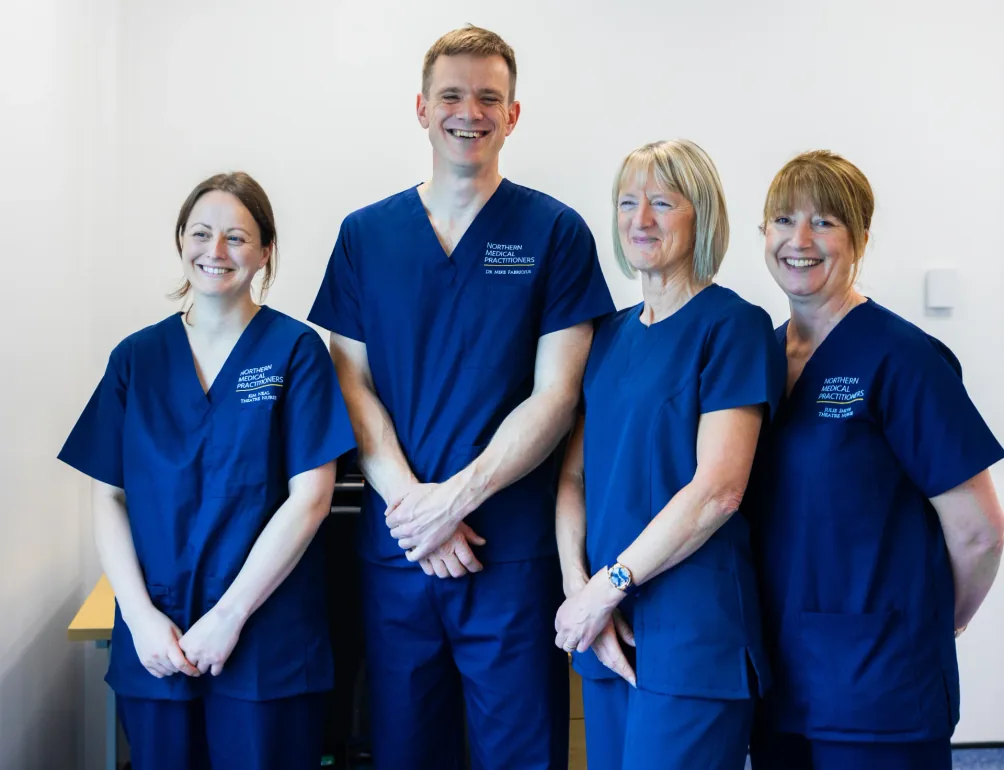
Our clinicians have extensive experience in musculoskeletal medicine and general practice, and integrate shockwave therapy into a broader evidence-based management plan. We use focused shockwave technology, allowing more precise energy delivery than many high-street or gym-based devices.

We are clear about expected outcomes. Improvement is usually gradual and occurs over weeks rather than immediately. Shockwave therapy is not a cure-all, but for appropriately selected patients it can significantly reduce pain, improve function, and help avoid more invasive treatments.

If shockwave therapy is unlikely to help, we will explain why and discuss alternative options.