
Joint injections are commonly used to help manage pain, stiffness and reduced movement caused by a range of musculoskeletal conditions.
At Northern Medical Practitioners in Newcastle, we offer ultrasound-guided joint and soft tissue injections as part of a doctor-led, evidence-based approach to assessment and treatment.
We offer a range of injectable options and do not believe in a one-size-fits-all solution. The most appropriate treatment depends on your diagnosis, symptoms, imaging and response to previous treatments.
Our role is to help you understand your options and decide whether an injection is appropriate for you.
Joint injections involve placing medication directly into a joint or surrounding soft tissue to help reduce pain and improve movement. They are commonly used in conditions such as arthritis, bursitis, tendon-related pain and joint stiffness.
Injections are used to manage symptoms and are usually combined with other treatments such as exercise or physiotherapy.

Joint injections may be considered for a wide range of musculoskeletal problems, including knee, hip and shoulder pain, osteoarthritis, inflammatory joint conditions, bursitis, carpal tunnel syndrome, tendon-related pain and frozen shoulder.
Suitability depends on careful clinical assessment, and not all conditions are appropriate for injection treatment.
We offer a range of ultrasound-guided injectable treatments, including:
Steroid injections β commonly used for short- to medium-term reduction of inflammation and pain
Hyaluronic acid injections β used in selected cases of osteoarthritis, particularly knee arthritis
Arthrosamid β a longer-acting injectable option for selected patients with knee osteoarthritis
The most suitable option will depend on your individual circumstances and will be discussed during consultation. We will also discuss alternative options such as load modifiation and focused shockwave therapy.
All injections at our clinic are performed using ultrasound guidance. This allows the needle to be visualised in real time, helping ensure accurate placement within the joint or soft tissue while avoiding nearby structures.Β
Ultrasound guidance improves confidence in injection accuracy and is standard practice in our clinic.
Assessment may include a detailed history, examination and review of previous imaging. Where appropriate, we can arrange X-ray, MRI or diagnostic ultrasound, or review imaging performed elsewhere.
This helps ensure injections are used appropriately and targeted to the correct area.
Response to joint injections varies. Some people experience significant improvement, while others notice little benefit. We offer online follow-up using a secure patient platform, allowing you to report symptoms and outcomes over time. This helps guide next steps if symptoms recur or do not improve.
If you are considering a joint injection, we offer a free phone consultation to discuss your symptoms, review previous treatments and determine suitability. This also allows us to talk through the different injection options and answer any questions before you decide how to proceed.
If treatment is appropriate, you can then book for assessment and injection at our Blaydon clinic. No GP referral is required. Our service is doctor-led, ultrasound guided and focused on choosing the right treatment for the individual rather than defaulting to a single option.
Steroid injections are typically priced from Β£270, with exact costs depending on the joint or tissue treated. Pricing will always be confirmed before booking.
Wrist (Radiocarpal joint)
Ankle (Tibiotalar joint)
Please contact us if the injection you require is not listed, as we may be able to help.
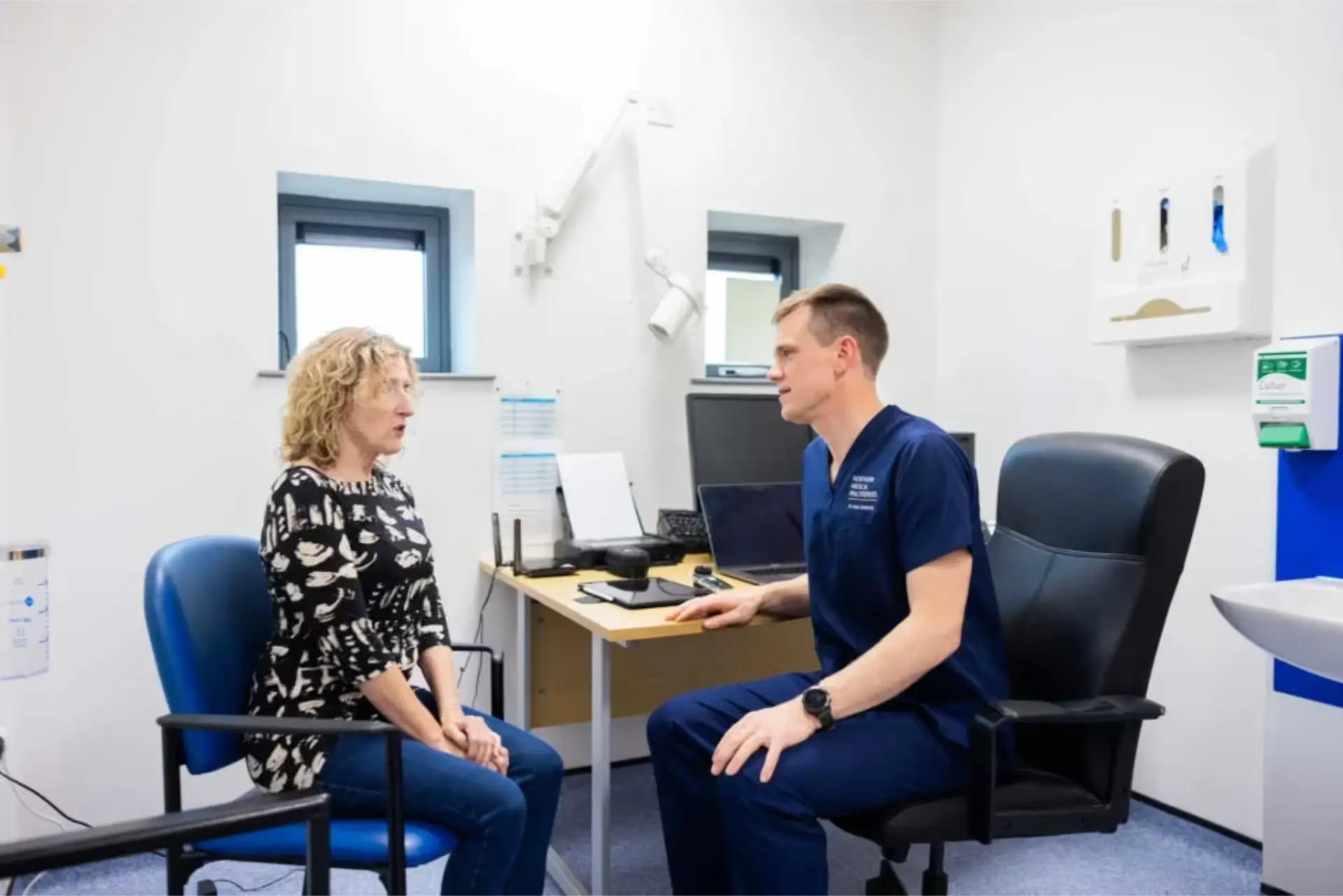
You will have a detailed consultation with our doctor, who will ask about your symptoms, as well as the rest of your medical history. If you have any x-ray or scan results, or letters from an NHS clinic, it can be helpful to send this in via email in advance, or upload them to our secure patient portal.
The doctor will discuss which of our treatments may be beneficial for you, and give you a detailed overview of the pros and cons of each treatment option, as well as the price.
Β
Absolutely none at all, but most patients do choose to go ahead after speaking with us.
If it turn out that we don’t have a suitable treatment option for you, we will be completely transparent about this.
If we have not yet met face-to-face, we will need to start with an examination of the joint or area concerned, to confirm our plan from the telephone consultation.
Your injection willΒ be done in our operating theatre. We will use a high-specification ultrasound system to examine the relevant area and plan the injection, before injecting some local anaesthetic into the skin and underlying tissues to numb them completely. The medication is then injected, under direct ultrasound vision,Β into the joint space or around the tendon in question, where it can have maximum effect.
We use local anaesthetic administered via a very fine needle, before all joint injections. There may be mild discomfort as this goes in, but you should not have any pain during the joint injection itself.
Ultrasound-guided injection is the gold standard of care. Using image-guidance ensures that the treatment is delivered to the exact spot where it is required, for maximum benefit. This is particularly important for the more modern treatments such as Durolane and Arthrosamid.
Ultrasound guidance also reduces the risk of complications, as the scanner allows the doctor to see structures such as arteries and nerves, which are best avoided.
We recommend taking it easy and avoiding strenuous activity for 48 hours after your injection. You don’t need to take to your bed though, it is fine to be up and about, maybe just hold off on that big walk or gym trip.Β
We use an online follow-up system called ‘Patient Watch’, this allows us to monitor your pain scores, chart your improvement, and contact you if we see a deterioration in your symptoms.
This will be discussed at your consultation in depth. The usual risks which we will discuss are: failure to improve symptoms, recurrence of symptoms, bleeding or infection in the joint (very rare), side effects to the steroid (flushing, menstrual changes, elevated blood sugars), skin changes around the injection site.
Please see our steroid injection page, which has detailed information, and it’s own FAQ.
For more information about Sinovial and Durolane, please see our hyaluronic acid injection page, which has detailed information, and it’s own FAQ.
Please see our Arthrosamid injection page,Β which has detailed information, and it’s own FAQ.
In selected cases, we may discuss biologic or orthobiologic injection options derived from a patientβs own blood. These treatments are not suitable for everyone and are not considered first-line therapy.
Where appropriate, they may be discussed as part of an individualised treatment plan, alongside established options and non-injection management strategies.
There is ongoing research into biologic and orthobiologic injections for joint conditions, but current evidence is mixed and not conclusive. Some patients may experience symptom relief, but there is no guarantee they are superior to standard treatments such as steroid, hyaluronic acid, or Arthrosamid injections.
We will explain the evidence and its limitations in your consultation, and recommend the most appropriate option based on your symptoms and goals.
No problem. Please contact us with your query.