

Condition

Understanding Hip Osteoarthritis

Hip osteoarthritis is a common cause of deep groin, buttock, or thigh pain and progressive loss of mobility. Symptoms often develop gradually and may initially be intermittent, but for many patients the condition leads to increasing stiffness, pain with walking, difficulty putting on shoes or socks, and reduced ability to exercise or work. Hip osteoarthritis can affect adults of any age, particularly following childhood hip problems, previous injury, or altered biomechanics, though it is more common later in life. While there is no cure for hip osteoarthritis, modern management aims to reduce pain, maintain function, and delay progression where possible. Many patients seek private assessment when symptoms are limiting quality of life or when they wish to explore non-surgical options while awaiting NHS review.
Hip Osteoarthritis 1 copy

What is hip osteoarthritis?

Hip osteoarthritis is a degenerative joint condition involving progressive cartilage loss within the hip joint, accompanied by changes to the underlying bone and surrounding structures. Over time, this can result in joint space narrowing, osteophyte formation, and reduced joint mobility. Although often labelled as β€œwear and tear”, hip osteoarthritis is influenced by multiple factors including joint shape, previous injury, muscle strength, activity patterns, and body weight. The severity of symptoms does not always correlate closely with imaging findings, making clinical assessment essential.


Symptoms and functional impact?

Typical symptoms include deep groin pain, stiffness (particularly after rest), reduced hip movement, and pain radiating to the thigh or knee. Patients often notice difficulty with walking distances, climbing stairs, standing from low chairs, or performing activities such as dressing. As symptoms progress, hip osteoarthritis can significantly limit independence and physical activity, with knock-on effects on general health and wellbeing. Sudden worsening of pain or mechanical symptoms should prompt reassessment to exclude alternative pathology.

Assessment and diagnosis

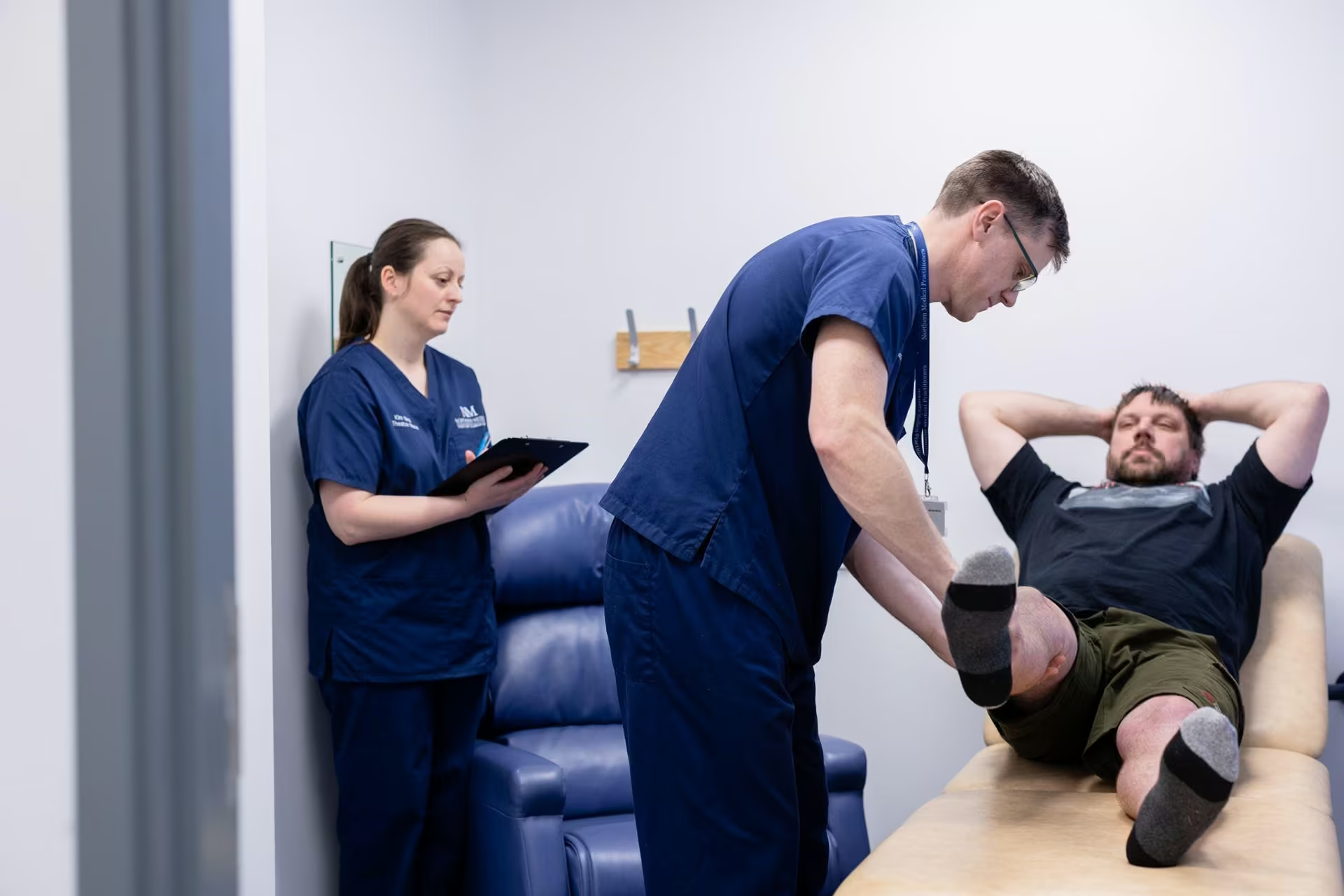
Diagnosis is based on a detailed history and physical examination, focusing on pain location, movement restriction, gait, and functional limitation. Plain X-ray imaging is commonly used to confirm osteoarthritic changes and assess severity. MRI is reserved for selected cases where symptoms are atypical or additional pathology is suspected. At Northern Medical Practitioners, assessment emphasises functional impact and clinical findings rather than imaging alone, as this more reliably guides management decisions.

Treatment options

Initial management focuses on conservative strategies including activity modification, targeted exercise and strengthening programmes, weight management where appropriate, and analgesia. For selected patients with persistent symptoms, image-guided injection treatments may be considered to provide symptom relief. These can include corticosteroid injections and, in carefully selected cases, biologically derived autologous injection therapies prepared from the patient’s own blood. Evidence for injection treatments in hip osteoarthritis is variable and benefits are typically modest and time-limited. Focused shockwave therapy (FSWT) has a limited role and may occasionally be considered where pain appears to arise from surrounding soft tissues rather than advanced joint degeneration. Surgical options, including hip replacement, are considered when symptoms remain severe despite optimal non-operative care.

Frequently Asked Questions

FAQ – Hip Osteoarthritis

What is hip osteoarthritis?
Hip osteoarthritis is a degenerative joint condition involving cartilage loss, changes to the underlying bone, and low-grade inflammation within the hip joint. It commonly causes pain, stiffness, and reduced mobility.
Not entirely. While mechanical wear contributes, hip osteoarthritis is a complex biological process influenced by factors such as joint shape, previous injury, muscle strength, body weight, genetics, and activity patterns.
No. Hip osteoarthritis is primarily diagnosed clinically. Many patients can be assessed and advised without new imaging. We will advise if imaging is likely to add useful information in your case.
Yes. We are happy to review previous NHS or private X-rays, MRI scans, and radiology reports. Existing imaging is often sufficient and helps avoid unnecessary repeat investigations.
Yes. If imaging is clinically appropriate, we can arrange X-rays and MRI scans as part of your assessment and explain how the results may influence management.
Plain X-rays are most commonly used to confirm osteoarthritic changes and assess severity. MRI scans are not routinely required for hip osteoarthritis but may be helpful in selected cases where symptoms are atypical or alternative pathology is suspected.
No. The severity of changes seen on imaging does not always correlate with symptom severity or functional limitation. Management decisions are based on the full clinical picture, not imaging alone.
No. Many patients attend after completing physiotherapy or other conservative treatments without sufficient improvement. We will advise if further physiotherapy is likely to be helpful.
Treatment options may include advice on activity and symptom management, injection therapies where appropriate, and guidance on onward care. Not every treatment is suitable for every patient, and options are discussed on an individual basis.
In selected patients, image-guided corticosteroid injections may provide temporary symptom relief. Benefits are variable and usually time-limited.
HA injections are sometimes used for hip osteoarthritis, but their role is more limited than in knee osteoarthritis. They are considered on a case-by-case basis and are not suitable for all patients.
In carefully selected cases, biologically derived autologous injection therapies prepared from the patient’s own blood may be discussed. Evidence of benefit in hip osteoarthritis is variable, and these treatments are not suitable for everyone.
Evidence is limited. Shockwave therapy has a very restricted role and may occasionally be considered where pain arises from surrounding soft tissues rather than the hip joint itself.
The duration of benefit varies between individuals. Injection treatments do not reverse osteoarthritis and symptom relief is typically temporary.
Hip replacement is usually considered when pain and functional limitation remain severe despite appropriate non-operative treatment and significantly affect quality of life.
Delaying surgery does not usually worsen the underlying joint damage, but prolonged pain and reduced mobility can affect overall health and independence. Decisions should be individualised.
Appropriate activity and exercise are generally safe. We can advise on sensible activity levels and signpost further support where needed.

Why choose Northern Medical Practitioners?

Our management of hip osteoarthritis is consultant-led and firmly evidence-informed. We are careful to recommend treatments only where there is a reasonable likelihood of benefit and are open about the limitations of non-surgical options. Advanced injection therapies are discussed cautiously and only offered where clinically appropriate. Where symptoms are unlikely to respond to conservative or injection-based treatments, we prioritise timely referral for orthopaedic opinion rather than prolonged ineffective intervention. This balanced approach reflects current UK and European guidance and supports informed decision-making.